BECOMING OUTLINE
videoinstallation 45 min.
videoinstallation 45 min.
Legende
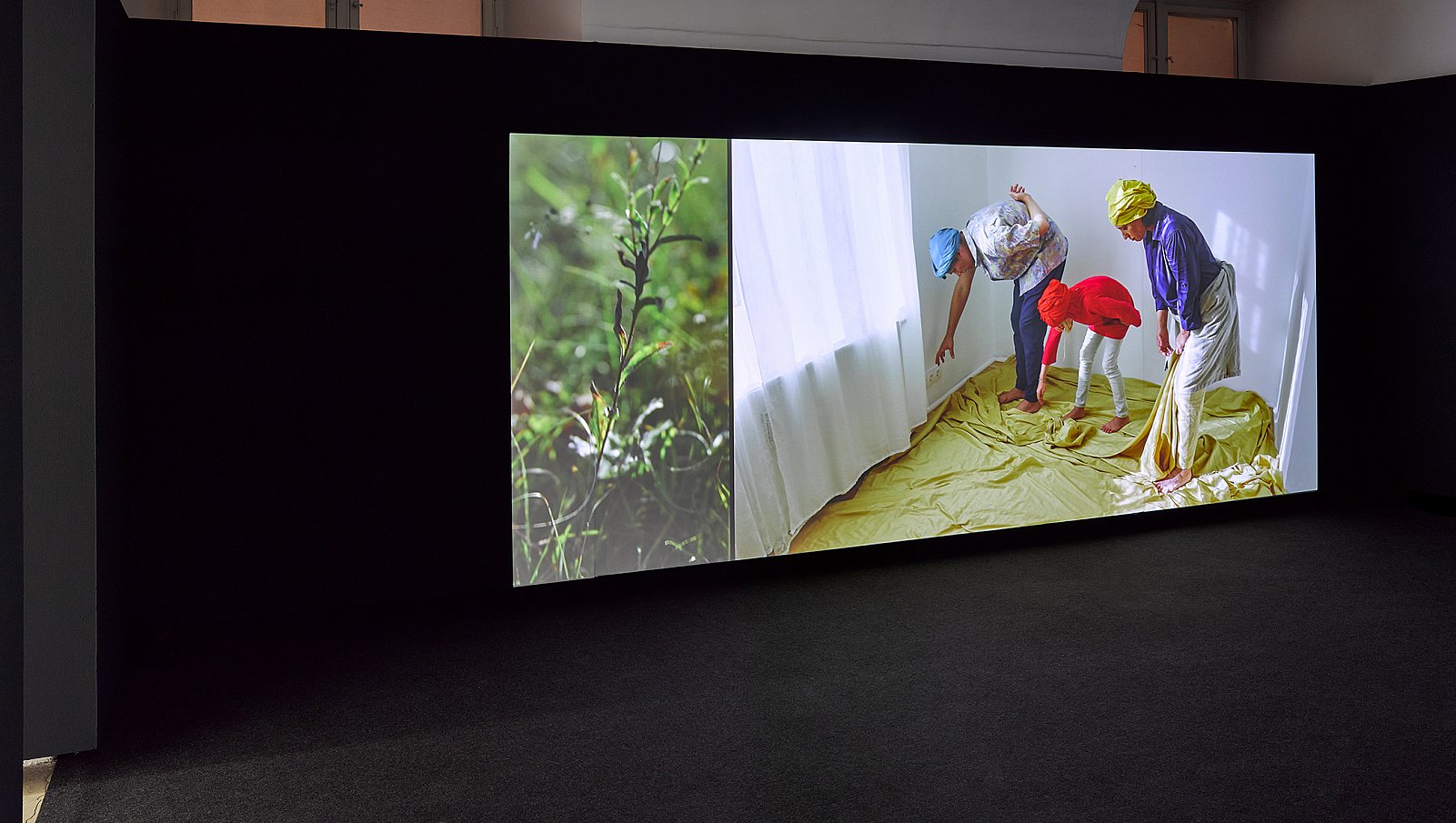
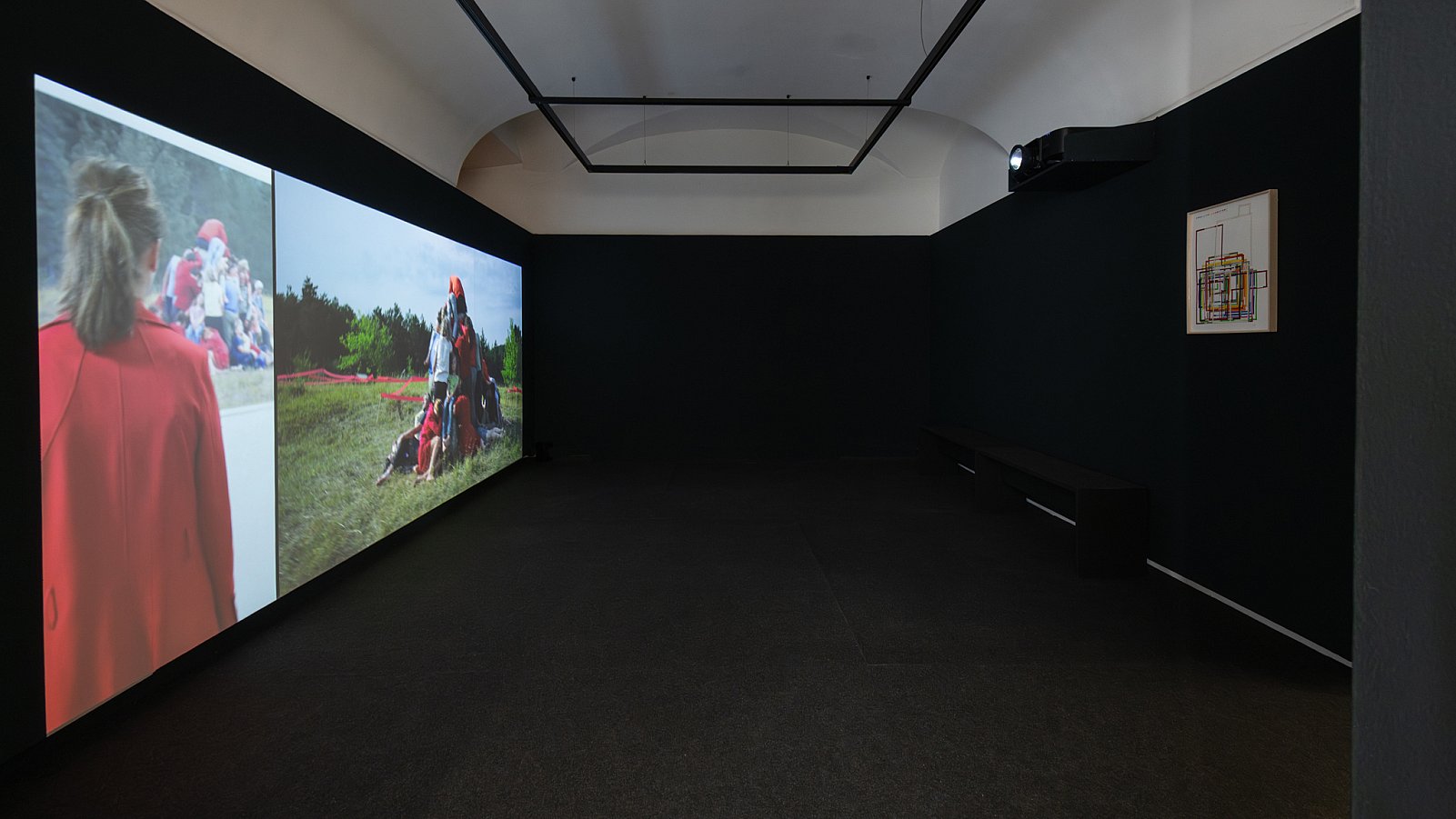
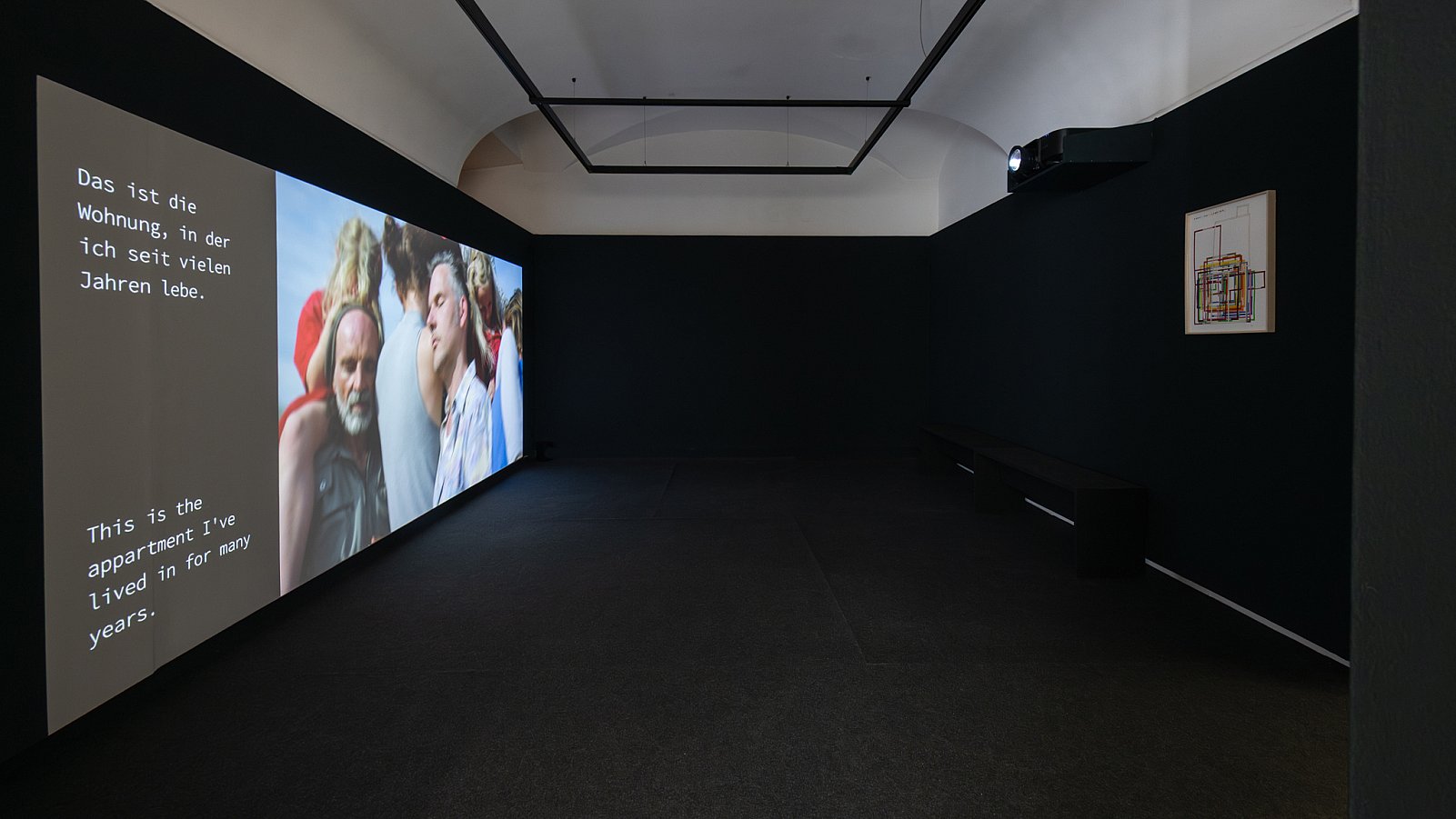
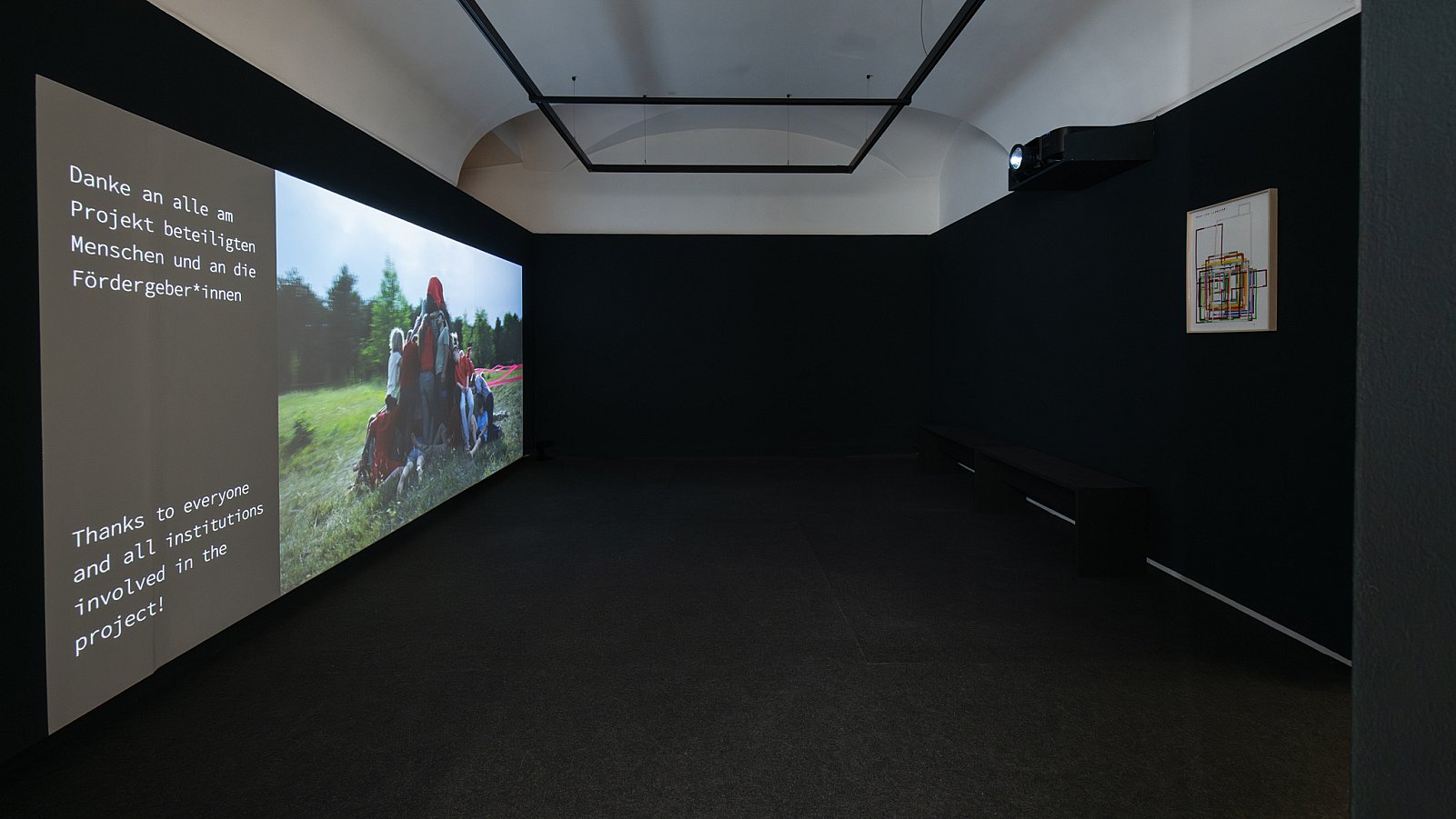
Screen 1 landscape format / Screen 2 portrait format, duration 45 min., 2024
In BECOMING OUTLINE, Miriam Bajtala approaches a complex subject matter with equally complex means. “What is a biography?” she might ask us. We could answer that we imagine it to be a linear narrative, perhaps in book form, which is well documented in literary history. But we could also say that every individual has a biography, composed of a collection of memories that are sometimes more and sometimes less reliable. This is a good starting point for psychoanalytic exploration. Or – if we fear such exploration – we might say: “Biography? I‘ll send it as an attachment!” And there you will find a résumé that encapsulates the highlights of our professional career in complete sentences. Impressive, yes, but not too long.
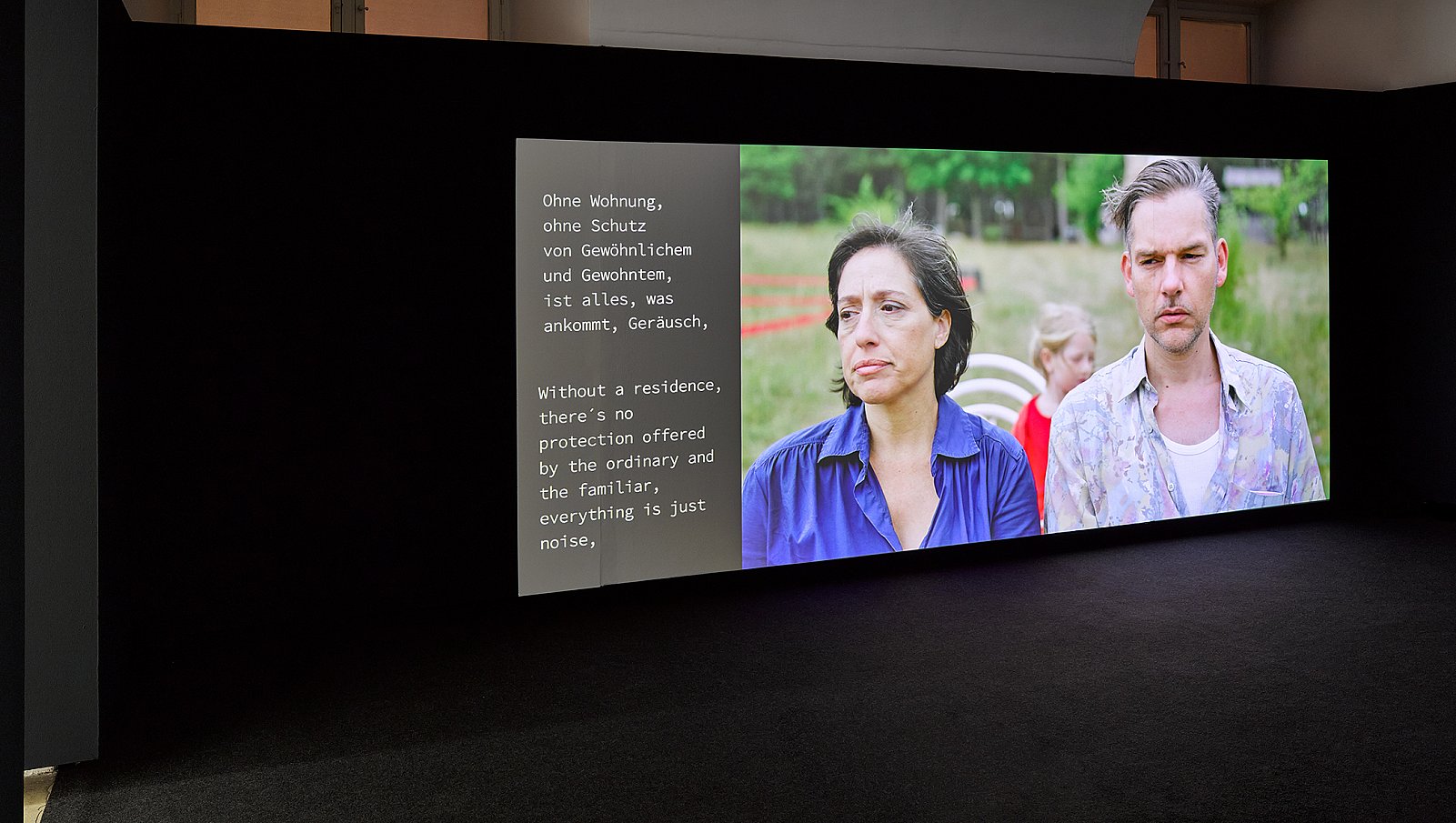
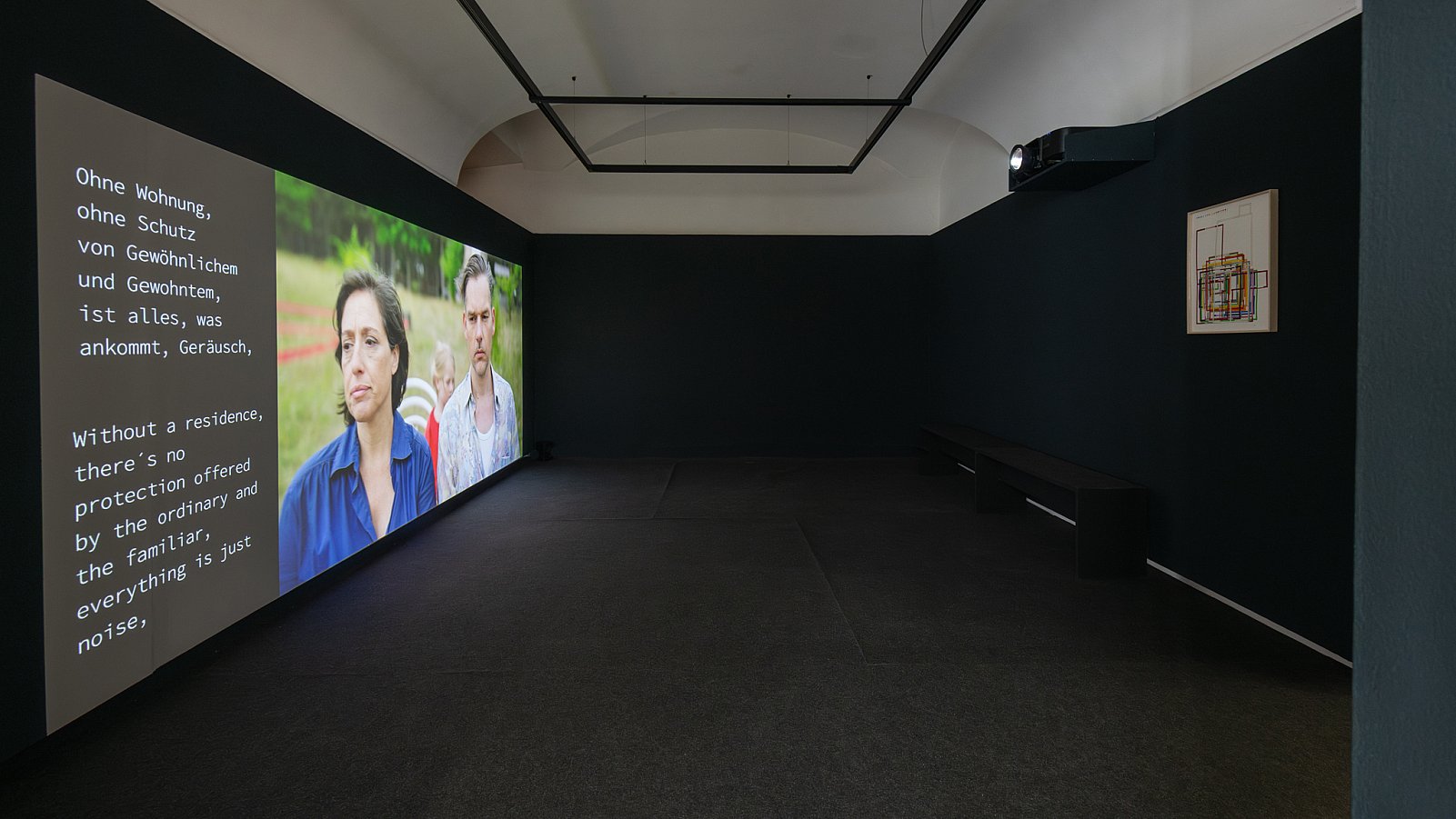
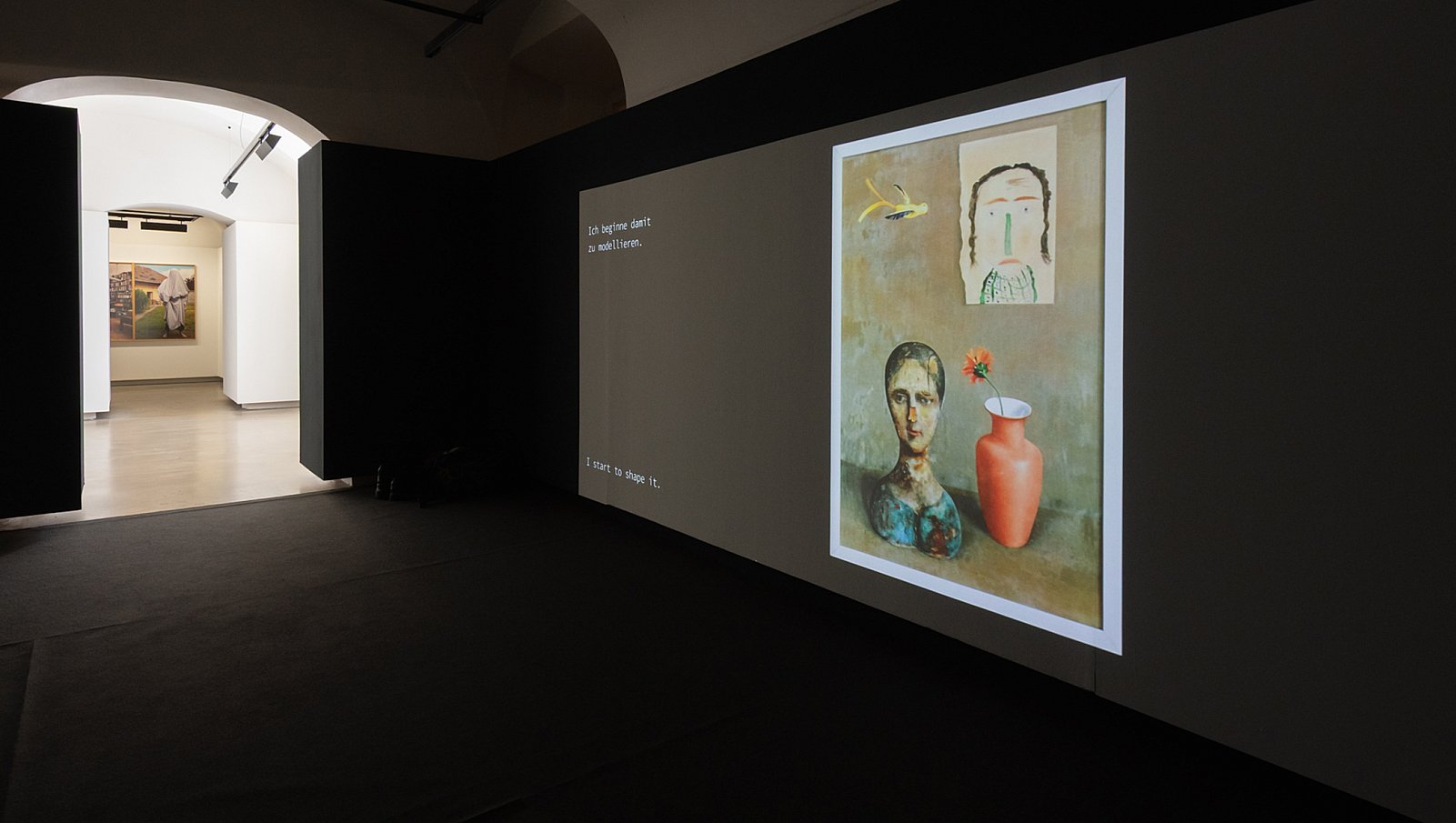
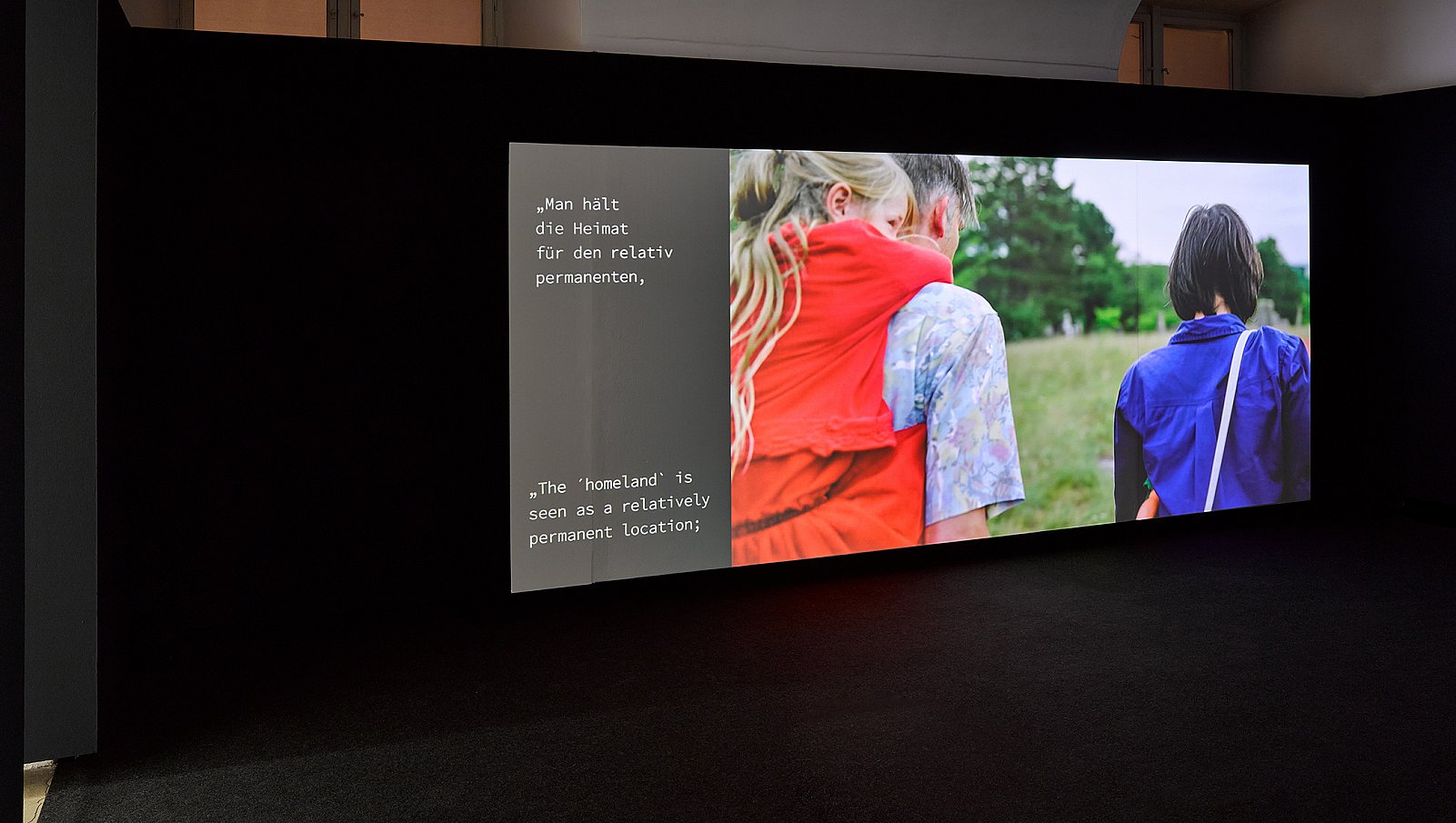
Bajtala’s video installation incorporates elements of all these approaches and more. Even the screen itself presents multiple perspectives. There is the large moving image in which spaces from childhood and youth are marked out on green meadows with red tape. Red tape that symbolizes walls but also national borders that play a role in this biography. The past is explored performatively here. Then there is the text at the bottom of the screen, which guides us through the film with the written word. And there are the marginal notes, which at times act like footnotes in a scientific text.
The simultaneity sometimes leads to deliberate overload, but also to unexpected synergies, for example when philosophers, sociologists, and intellectuals discuss power relations on the left, while on the right two children argue: “I decide.” – “No, I decide.” – “But I have superpowers!” What happens to our intuitive understanding of the world between childhood and adulthood? Bajtala seems to ask us. Does a message become more valuable when the words become more complicated? What do we have to give up in order to be considered educated and sophisticated? And in particular: in a so-called upward mobility biography?
“It’s about social shame,” says the omniscient narrator’s voice at the beginning of the film. And when, 40 minutes later, women of all ages gather to shout this shame into the wind together, the film finally leaves isolated individual destinies behind. A biography is also a product of circumstances. And a film like this is also a declaration of love for art. Not as an intellectual, elitist world, but as one that embraces being different, breaking out and reinventing oneself.
Text written by Marlene Denningmann, 42. Kasseler Dokfest, Monitoring, 2025
In BECOMING OUTLINE, Miriam Bajtala approaches a complex subject matter with equally complex means. “What is a biography?” she might ask us. We could answer that we imagine it to be a linear narrative, perhaps in book form, which is well documented in literary history. But we could also say that every individual has a biography, composed of a collection of memories that are sometimes more and sometimes less reliable. This is a good starting point for psychoanalytic exploration. Or – if we fear such exploration – we might say: “Biography? I‘ll send it as an attachment!” And there you will find a résumé that encapsulates the highlights of our professional career in complete sentences. Impressive, yes, but not too long.
Bajtala’s video installation incorporates elements of all these approaches and more. Even the screen itself presents multiple perspectives. There is the large moving image in which spaces from childhood and youth are marked out on green meadows with red tape. Red tape that symbolizes walls but also national borders that play a role in this biography. The past is explored performatively here. Then there is the text at the bottom of the screen, which guides us through the film with the written word. And there are the marginal notes, which at times act like footnotes in a scientific text.
The simultaneity sometimes leads to deliberate overload, but also to unexpected synergies, for example when philosophers, sociologists, and intellectuals discuss power relations on the left, while on the right two children argue: “I decide.” – “No, I decide.” – “But I have superpowers!” What happens to our intuitive understanding of the world between childhood and adulthood? Bajtala seems to ask us. Does a message become more valuable when the words become more complicated? What do we have to give up in order to be considered educated and sophisticated? And in particular: in a so-called upward mobility biography?
“It’s about social shame,” says the omniscient narrator’s voice at the beginning of the film. And when, 40 minutes later, women of all ages gather to shout this shame into the wind together, the film finally leaves isolated individual destinies behind. A biography is also a product of circumstances. And a film like this is also a declaration of love for art. Not as an intellectual, elitist world, but as one that embraces being different, breaking out and reinventing oneself.
Text written by Marlene Denningmann, 42. Kasseler Dokfest, Monitoring, 2025
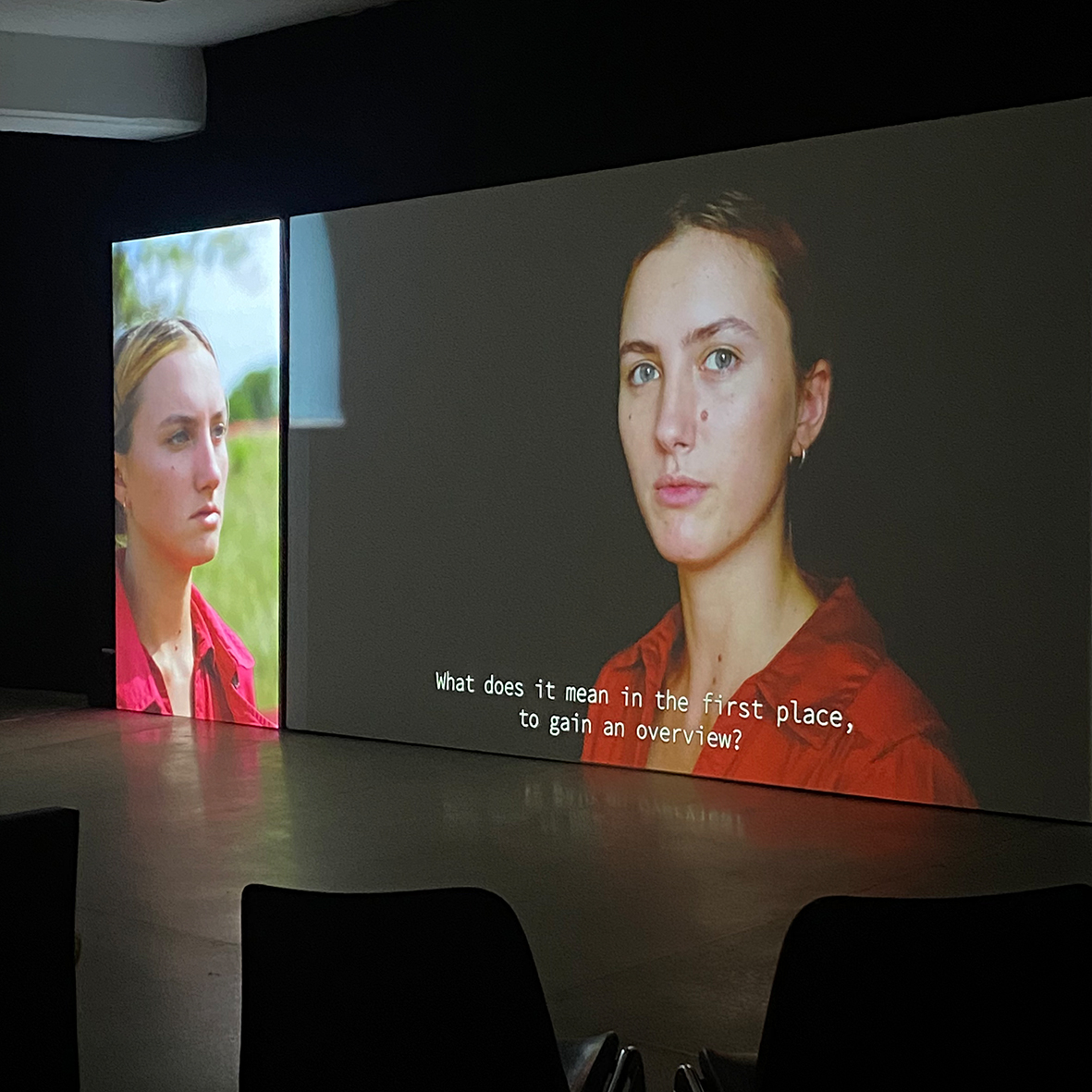
Kunstraum Goethestrasse, Linz, 2024
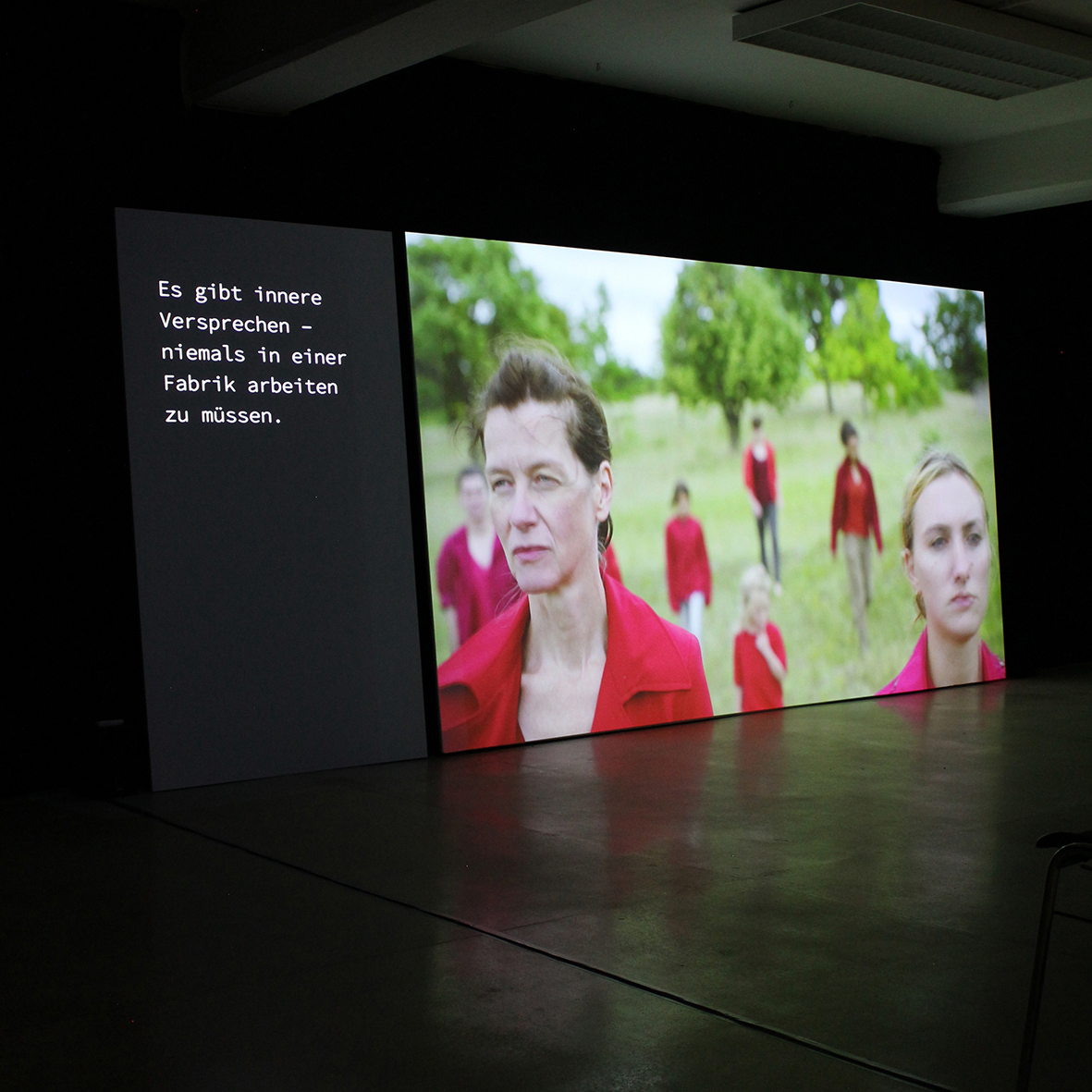
Kunstraum Goethestrasse, Linz, 2024